
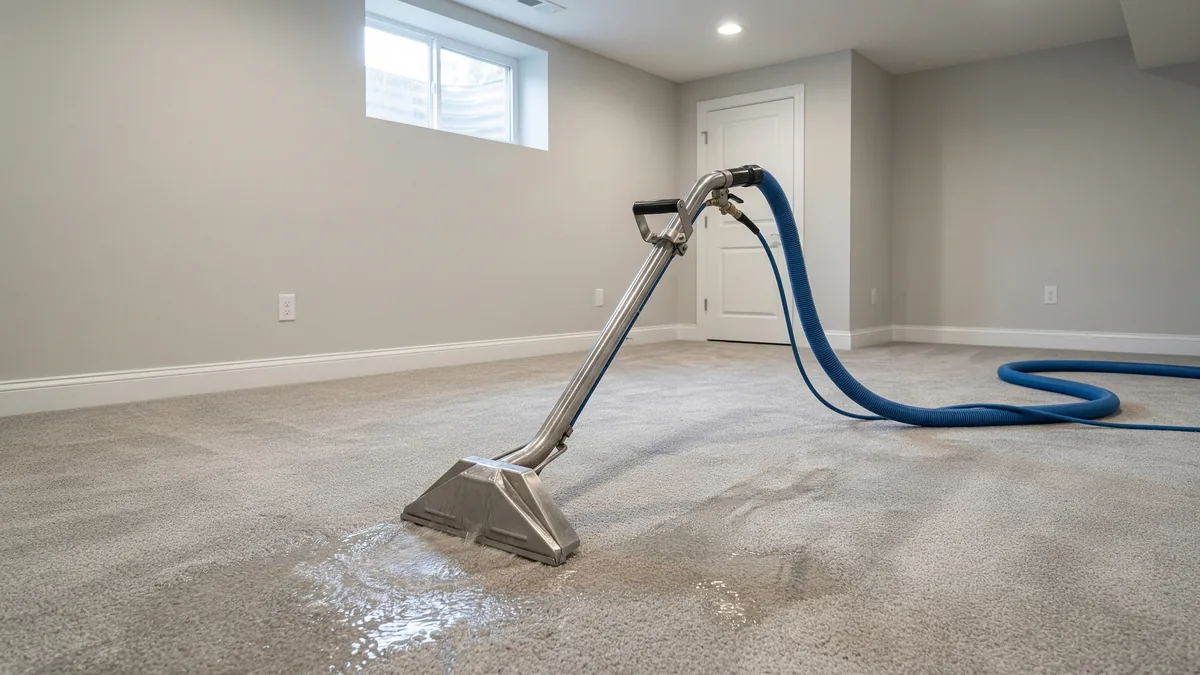
When your basement floods, stay out of standing water until power to the affected area is confirmed off, shut off the home's main water valve if the leak is indoor plumbing, take timestamped photos and videos before moving items, identify the water category (clean, gray, or black), and call an independent restoration crew immediately to start extraction.
Walking down the stairs to find water covering your basement carpet or pooling around the furnace is one of the most stressful moments a homeowner can face. In the first 60 minutes, the decisions you make determine whether you stay safe from electrical shock, preserve your homeowners insurance claim, and stop moisture before it ruins wall framing and triggers mold.
If you are standing in front of an active flood right now in ZIP 84045—whether in Wildflower, Talons Cove, Legacy Farms, or bordering Eagle Mountain—call our Saratoga Springs water damage restoration referral line at (801) 555-0194 to route an independent local crew for flooded basement cleanup, then follow this exact step-by-step playbook while they are en route.
Minutes 0–10: Life Safety & Stopping the Source
Never rush blindly into standing basement water. Electrical outlets, extension cords, space heaters, and gas-fired water heaters turn flooded basements into serious shock and contamination hazards.
Step 1: Check Electrical Safety Before Stepping In
If water has reached electrical outlets, power strips, or the bottom of your furnace or water heater, do not step into the water. If your main breaker panel is located on dry ground (for example, in the garage or an unaffected main-floor hallway), switch off the circuits supplying the basement. If the breaker panel itself sits inside the flooded basement and you would have to stand in water to reach it, stay back and wait for a qualified electrician or utility shutoff.
Step 2: Shut Off the Water Source (If Indoor Plumbing)
If the flood is coming from a ruptured PEX pipe, burst washing-machine hose, failed water softener, or leaking tank water heater, close your home's main culinary shutoff valve immediately. In most Saratoga Springs homes, the main quarter-turn ball valve sits in the basement utility room along the street-facing foundation wall or inside the garage mechanical closet. If the water is entering from outside during a cloudburst, focus on redirecting downspouts or placing temporary barriers once safe—and read our storm and flash flood restoration page for exterior runoff steps.
Step 3: Identify the Water Category Before Touching Anything
Water color and source determine what you can safely handle yourself:
- Clear supply-line water (Category 1): Safe to step in with rubber boots once power is off, though rapid emergency water extraction is still critical before it degrades.
- Appliance or sump overflow (Category 2): Wear gloves and boots; avoid splashing skin or eyes.
- Floor-drain sewage or muddy exterior storm water (Category 3): Keep children and pets completely out of the basement and do not attempt DIY mop-ups. Request dedicated sewage backup cleanup or storm mitigation.
Minutes 10–30: Insurance Documentation & Smart Damage Control
Before you move soaked rugs or haul cardboard boxes to the curb, create an indisputable visual record for your insurance adjuster.
| Action | Do This Immediately | Avoid This Common Mistake |
|---|---|---|
| Photos & Video | Record wide-angle video of every flooded room, close-ups of the water source, and water-line height against baseboards. | Do not throw away burst hoses, cracked valves, or ruined carpet before the adjuster or crew documents them. |
| Furniture & Belongings | Lift wooden furniture legs onto aluminum foil or plastic blocks; move dry boxes and electronics to upper floors. | Do not leave wood furniture legs sitting on wet carpet—wood stain bleeds permanently into carpet fibers. |
| Airflow & Drying | Keep HVAC blowers off if sewage or muddy storm water is present so contaminated air does not circulate upstairs. | Do not assume household box fans dry carpet pad or drywall cavities—surface-dry carpet still traps mold underneath. |
| Wet Drywall & Ceilings | Place buckets under dripping basement ceiling seams and clear valuables underneath sagging drywall. | Do not poke holes in a sagging water-filled ceiling without eye protection and heavy drop cloths. |
Minutes 30–60: Preparing for the Restoration Crew's Arrival
Clearing a direct path from your driveway or walkout patio door to the basement saves valuable extraction time once the independent mitigation truck arrives. Move vehicles out of the driveway so truck-mounted vacuum hoses can run cleanly into the basement, secure family pets in an upstairs bedroom, and write down the approximate time you first noticed the water.
When the technician walks the space with an infrared thermal camera and moisture meter, ask four direct questions:
- What water category and drying class is this loss? (See our water damage categories guide.)
- Which materials can be dried in place versus removed? (Carpet pad is frequently removed even in clean-water losses so the subfloor and carpet backing can dry; see drywall flood cut vs. drying in place.)
- How many LGR dehumidifiers and air movers will run, and for how many days? (Check typical timelines in how long structural drying takes.)
- Will daily moisture-meter logs and photos be provided for my insurance claim? (Review claim best practices in our Utah homeowners insurance guide.)
Why the First 24 to 48 Hours Matter Most in Utah Basements
Even in Utah's relatively dry outdoor climate, a flooded basement quickly becomes a sealed high-humidity chamber. Concrete slabs absorb moisture slowly and release it back into the air for days; gypsum drywall wicks water upward like a sponge through capillary action; and particleboard baseboards swell irreversibly within hours. Within 24 to 48 hours of elevated indoor humidity, dormant mold spores naturally present in household dust begin colonizing damp drywall paper, carpet tack strips, and wood sill plates.
Rapid bulk extraction followed by closed-system structural drying and dehumidification breaks that cycle—lowering relative humidity below 40%–45% and pulling bound moisture out of framing before microbial growth can take hold. If your basement also needs post-flood reconstruction later, check our Saratoga Springs building permits guide and run ballpark planning numbers in our cost calculator.
Quick Emergency Reference for Saratoga Springs Homeowners
- 24/7 Local Restoration Referral Line: (801) 555-0194 (Saratoga Springs, Eagle Mountain, Lehi, ZIP 84045)
- Saratoga Springs Public Works Emergency Line (City Mains Only): (801) 404-2468
- Preventing a Repeat Flood: Inspect your 5% foundation grade and test your basement sump pump backup once drying is complete.
Room-by-Room Triage: Protecting Finishes While Waiting for Dispatch
Finished basements across Wildflower, Harvest Hills, and Northshore combine very different building materials in the same lower level. Knowing how each finish reacts during the first two hours helps you prioritize what to move or protect safely (assuming electrical power is off and the water is clean Category 1):
| Basement Area / Material | First-Hour Risk | Safe Homeowner Action |
|---|---|---|
| Plush Carpet & Pad | Pad absorbs several gallons per square yard and traps water against tack strips and baseboards. | Lift wooden furniture onto foil or plastic blocks; remove throw rugs and cardboard boxes; leave stretched carpet for commercial weighted extraction. |
| Click-Lock LVP / Laminate | Water slips through edge expansion gaps and pools invisibly beneath planks; laminate fiberboard swells permanently. | Blot surface puddles with clean towels; avoid running high heat; ask the technician to check subfloor moisture with a pinless meter. |
| Utility Room (Furnace & Water Heater) | Submerged gas control valves, blower motors, or circuit boards create shock and carbon-monoxide hazards. | Do not relight a submerged gas water heater or furnace pilot until a qualified HVAC/plumbing technician inspects the burner and controls. |
| Storage Closets & Finished Shelving | Cardboard boxes wick water upward rapidly, transferring ink stains and accelerating mold on paper goods. | Move dry upper-shelf boxes to the garage or main floor; separate wet heirlooms, photos, and electronics immediately. |
Why You Should Never Rely on Air Conditioning Alone to Dry a Flooded Basement
Many homeowners crank their central air conditioner down to 65°F thinking it will dehumidify a flooded basement. While central AC removes modest ambient humidity during normal summer weather, it is engineered to cool air—not to handle the massive evaporation load of hundreds of gallons soaked into carpet, drywall, and concrete. Worse, lowering basement air temperature below 68°F actually slows evaporation from wet framing and can push cool, damp air up into main-floor ductwork. Dedicated commercial LGR dehumidifiers paired with high-velocity air movers in a closed drying chamber extract moisture far faster while keeping temperatures in the optimal drying zone.
Frequently Asked Questions
Should I use a wet/dry shop vac while waiting for a restoration crew?
Should I call my insurance company before or after calling a restoration crew?
How do I stop basement carpet from smelling musty after a flood?
Need Local Water Mitigation Help in ZIP 84045?
Call (801) 555-0194 any hour to connect with an independent local water damage restoration contractor serving Saratoga Springs, Eagle Mountain, and Lehi.
Call (801) 555-0194 — 24/7 Dispatch