
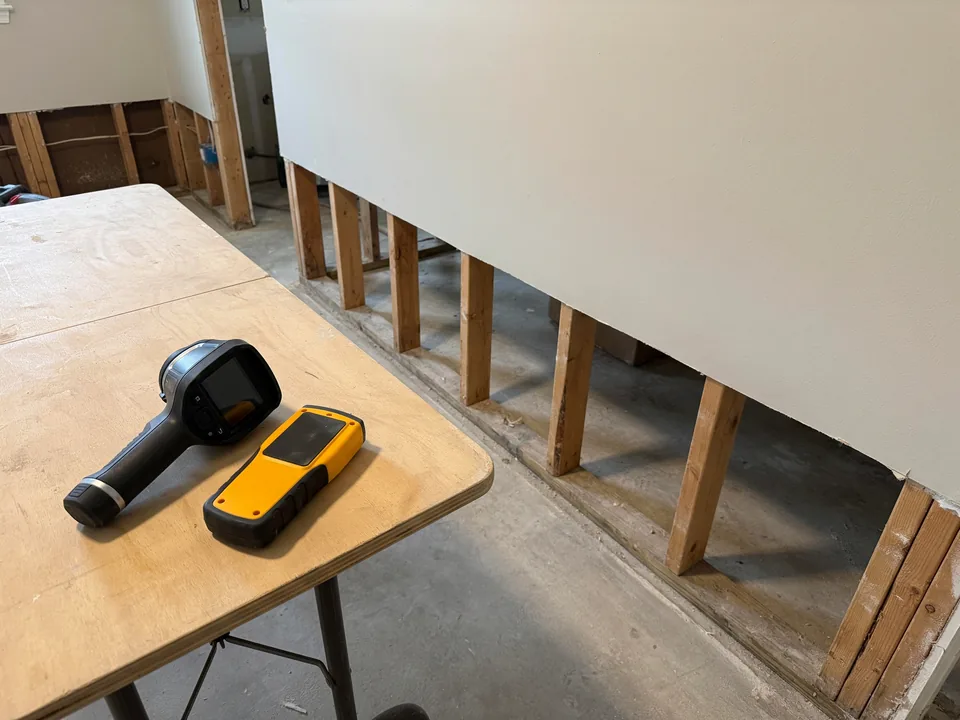
Under IICRC S500 water-restoration standards, Category 1 is clean potable supply water, Category 2 (gray water) carries chemical or biological contaminants from appliances or sump overflows, and Category 3 (black water) is grossly unsanitary sewage or exterior flood runoff. Water category determines which materials can be dried in place and which must be removed.
When an independent restoration technician inspects a wet home in Saratoga Springs, the very first technical classification they make is the Water Contamination Category (1, 2, or 3) and the Evaporation Class (1 through 4). Those two numbers—defined by the IICRC S500 Standard for Professional Water Damage Restoration—govern everything that happens next: safety gear, antimicrobial chemistry, whether carpet and drywall can be saved, and how your insurance adjuster evaluates the mitigation invoice.
Whether you are dealing with a ruptured supply line in Northshore, a washing-machine overflow in Legacy Farms, or muddy window-well runoff in Wildflower, understanding these categories helps you ask sharper questions when you call our Saratoga Springs water damage restoration line at (801) 555-0194.
Water Damage Categories 1, 2, and 3 Compared Side by Side
| Category | Common Saratoga Springs Sources | Health & Safety Risk | Typical Material Salvageability |
|---|---|---|---|
| Category 1 (Clean Water) | Burst PEX/copper supply pipes, toilet supply lines, water heater tank leaks, ice-maker lines, clean tub overflows. | Low initial risk; degrades to Category 2/3 if left stagnant for 24–48+ hours or passes through dirty cavities. | Carpet, drywall, and framing can often be saved when emergency water extraction and LGR drying start promptly. |
| Category 2 (Gray Water) | Washing machine discharge, dishwasher drain lines, sump-pump basin overflows, toilet overflows with urine (no feces). | Moderate biological/chemical contamination; can cause illness if ingested or mishandled. | Carpet pad is removed; carpet may be cleaned/sanitized if promptly treated; soaked insulation and lower drywall often removed. |
| Category 3 (Black Water) | Sanitary sewer backups, toilet backups with feces, Lake Mountain cloudburst runoff entering window wells, Utah Lake floodwater. | High hazard: pathogenic bacteria, viruses, parasites, pesticides, and silt. | All contacted porous materials (carpet, pad, baseboards, wet drywall, insulation, particleboard) must be removed and disposed of before antimicrobial sanitization. |
Why Clean Category 1 Water Degrades Over Time
One of the biggest surprises for homeowners in Harvest Hills and Eagle Mountain is learning that a clean burst pipe does not stay Category 1 forever. Clean water acts as a solvent: as it runs across dusty subfloors, through fiberglass wall insulation, over pet dander in carpet padding, and sits at warm indoor temperatures, bacteria multiply rapidly. Within 24 to 48 hours without extraction and dehumidification, a Category 1 burst pipe water damage event frequently degrades into Category 2 gray water—and stagnant water left for several days can degrade all the way to Category 3.
That biological clock is why calling for mitigation the same day you discover a leak almost always costs far less—and preserves far more of your finished basement—than waiting through the weekend to see if things dry on their own.
Understanding Water Damage Classes 1 Through 4 (Drying Difficulty)
While Category measures contamination, Class measures evaporation difficulty—how much water porous building materials absorbed and how hard commercial equipment must work to dry them:
- Class 1 (Least Evaporation): Affects only part of a room with low-permeance materials like concrete, vinyl tile, or plywood. Little moisture wicked into walls.
- Class 2 (Fast Evaporation): Water affects an entire room of carpet and cushion, wicking up drywall less than 24 inches, with moisture present in structural wood framing. Most Saratoga Springs flooded basement cleanup calls fall into Class 2.
- Class 3 (Fastest Evaporation): Water came from overhead—such as an upstairs burst pipe or roof storm leak—saturating ceilings, walls, insulation, carpet, and subfloors simultaneously.
- Class 4 (Specialty Drying): Deeply bound moisture trapped in low-permeance materials such as hardwood floors, plaster, concrete block, crawlspace framing, or double-layer subfloors. Class 4 requires specialty low-grain dehumidifiers, floor drying mats, and longer run times (see how long structural drying takes).
How Category & Class Affect Cleanup Protocols in ZIP 84045
Category 1 Protocol: Maximize Salvageability
Technicians extract bulk water immediately, lift carpet corners to pull wet pad if needed, set up calculated ratios of air movers and LGR dehumidifiers, and verify dry framing via daily moisture-meter logs. Often, baseboards and drywall stay intact unless wet insulation is trapped inside exterior walls (see drywall flood cut vs. drying in place).
Category 2 Protocol: Sanitize & Isolate
Crews extract standing gray water, discard saturated carpet pad, apply EPA-registered antimicrobial solutions to concrete slabs and framing, remove wet porous trim/insulation where moisture cannot be sanitized, and transition to closed-system structural drying and dehumidification.
Category 3 Protocol: Full Containment & Porous Removal
For sewage backup cleanup or storm and flash flood restoration, independent contractors isolate the work zone with poly sheeting, shut down HVAC returns serving the space, wear full PPE, remove all contaminated porous building materials (often 12 to 24 inches above the visible waterline), scrub and disinfect remaining structural concrete and studs, and run HEPA air scrubbers alongside LGR dehumidifiers until dry standards are confirmed.
How Water Category Impacts Your Estimate & Insurance Claim
Because Category 3 cleanup requires containment, bio-hazard disposal, heavier antimicrobial application, and porous demolition, per-square-foot mitigation costs are roughly double to triple Category 1 extraction. You can compare ballpark differences right now in our Saratoga Springs cost calculator. Equally important, Utah insurers evaluate coverage strictly by the water's origin—covered sudden plumbing failure versus excluded exterior surface flood or capped sewer-backup endorsement—so accurate documentation from Day 1 protects your claim.
Material-by-Material Salvageability Matrix (Categories 1, 2 & 3)
When reviewing a mitigation estimate from an independent contractor in Saratoga Springs, Eagle Mountain, or Lehi, homeowners often wonder why one room's flooring is being dried while another room's flooring is torn out immediately. This reference chart summarizes standard IICRC S500 salvageability guidelines across common Utah County residential finishes:
| Building Material | Category 1 (Clean) | Category 2 (Gray) | Category 3 (Black / Storm) |
|---|---|---|---|
| Carpet | Often salvageable with rapid extraction & drying | Case-by-case: requires thorough cleaning & antimicrobial treatment | Remove & discard (porous health hazard) |
| Carpet Pad (Cushion) | Sometimes dried if thin/synthetic; often replaced to dry subfloor faster | Remove & discard | Remove & discard |
| Gypsum Drywall | Often dried in place if uninsulated & structurally sound | Flood-cut 12"–24" if saturated or insulated behind | Mandatory flood-cut 12"–24" above high-water line |
| Fiberglass Batt Insulation | Remove once wet (loses R-value & traps moisture) | Remove & discard | Remove & discard |
| Solid Wood Framing / Studs | Dry in place to baseline moisture target | Clean, apply antimicrobial & dry to target | Scrub, apply EPA-registered disinfectant & dry to target |
| MDF / Particleboard Trim & Cabinets | Swollen MDF usually replaced; solid wood trim can often be dried | Replace swollen MDF; sanitize solid wood | Remove & discard porous particleboard/MDF |
| Ceramic Tile & Poured Concrete | Extract & dry | Extract, clean & sanitize | Extract, pressure/scrub clean, disinfect & dry |
Questions to Ask Your Restoration Technician About Water Classification
Because water category directly controls demolition scope and insurance coverage, ask the arriving independent contractor to walk you through their classification before signing a work authorization:
- "Did the water start as Category 1, or has dwell time degraded it to Category 2?" If a leak ran undetected behind a basement utility wall for several days before you noticed damp baseboards, the technician should show moisture-meter and visual evidence explaining why antimicrobial treatment or tear-out is recommended.
- "Are you setting up containment barriers and HEPA air scrubbing?" For Category 3 sewage backup cleanup or storm flood restoration, poly containment and negative air filtration keep aerosolized contaminants out of your upstairs living rooms and HVAC return ducts.
- "Will your final report document the exact Water Category, Drying Class, and daily moisture logs?" Clear IICRC-aligned documentation helps your insurance adjuster verify why specific porous materials had to be removed rather than dried in place.
Local Saratoga Springs Scenarios: How Category Changes by Neighborhood
In day-to-day calls across ZIP 84045, technicians see distinct local patterns. Along the Utah Lake shoreline in Talons Cove and Saratoga Shores, spring groundwater rising into a sump pit begins as Category 2 gray water but can shift toward Category 3 if silt, lawn fertilizers, or floor-drain backup mixes into the standing pool. Up on the newer benches of Wildflower and Northshore, a ruptured second-floor PEX supply line starts as clean Category 1 water—meaning fast same-day emergency water extraction often saves basement drywall and carpeting that would otherwise require demolition after 48 hours of sitting stagnant.
Frequently Asked Questions
Can rainwater from a Saratoga Springs thunderstorm really be Category 3 black water?
Why do restoration crews almost always discard carpet pad after Category 2 or 3 water?
How do technicians measure whether Class 2 or Class 4 wood framing is dry?
Need Local Water Mitigation Help in ZIP 84045?
Call (801) 555-0194 any hour to connect with an independent local water damage restoration contractor serving Saratoga Springs, Eagle Mountain, and Lehi.
Call (801) 555-0194 — 24/7 Dispatch