
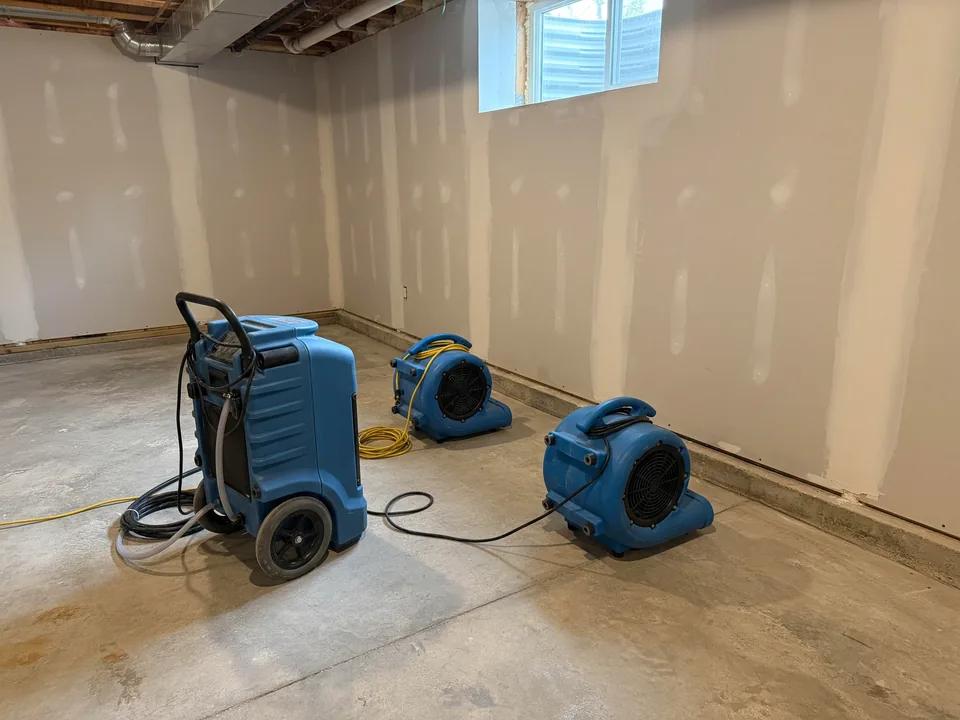
Most residential water losses in Saratoga Springs take 3 to 5 days of continuous 24-hour structural drying using commercial LGR dehumidifiers and high-velocity air movers. Dense Class 4 materials—such as hardwood flooring, plaster, double subfloors, or saturated concrete walls—often require 5 to 7+ days until moisture meters verify dry targets.
Once bulk standing water is pumped out of a flooded basement or main floor, the loud hum of commercial fans and dehumidifiers begins—and almost every homeowner in ZIP 84045 asks the same question: how many days will this equipment stay in my house? Understanding the physics behind structural drying and dehumidification explains why rushing equipment pickup by even 24 hours can cause buckled floors, peeling paint, and hidden mold.
If your home is still wet in Talons Cove, Harvest Hills, Wildflower, or Lehi, call our Saratoga Springs water damage restoration referral line at (801) 555-0194 to connect with an independent local mitigation crew equipped with calibrated meters and commercial LGR units.
Typical Structural Drying Timelines by Material & Class
| Affected Material / Scenario | Typical Drying Window | Why It Takes This Long |
|---|---|---|
| Bare concrete basement slab + light framing (Class 1) | 2 to 3 days | Low porosity; surface moisture evaporates rapidly once standing water is extracted. |
| Finished basement carpet, drywall & sill plates (Class 2) | 3 to 4 days | Moisture trapped inside bottom wall plates, tack strips, and drywall gypsum requires steady low-grain air. |
| Multi-level burst pipe soaking ceilings & walls (Class 3) | 4 to 5 days | Gravity carries water into ceiling joist bays, insulation, and partition framing across two floors. |
| Solid or engineered hardwood floors / dense plaster (Class 4) | 5 to 7+ days | Bound moisture locked inside dense wood cells requires specialty floor-mat suction and low vapor pressure. |
What Happens Day by Day During Professional Structural Drying?
Day 1: Bulk Extraction, Moisture Mapping & Equipment Placement
Liquid water removes hundreds of times faster via physical suction than evaporation. That is why independent crews always perform thorough emergency water extraction first. Next, they map wet versus dry zones using infrared thermal cameras and pinless meters, establish a baseline "dry standard" from unaffected wood in your home, and calculate exact air-mover and LGR dehumidifier counts based on cubic room volume and drying class.
Days 2–3: Rapid Evaporation & Psychrometric Monitoring
High-velocity air movers break the stagnant boundary layer of humid air clinging to wet drywall and framing, pushing moisture into the room's air. Commercial low-grain refrigerant (LGR) dehumidifiers then pull that moisture out of the air and pump condensate straight into a floor drain or utility sink. Each day, the technician returns to log four key metrics: indoor temperature, relative humidity (RH), grains per pound (GPP) of moisture in the air, and wood/drywall moisture percentages.
Days 4–5+: Bound Moisture Release & Final Dry Verification
After free surface water evaporates, deeper "bound" moisture inside framing studs, subfloor seams, and concrete slabs migrates slowly to the surface. On the surface, walls feel completely dry to the hand—yet a pin meter pushed into the bottom plate may still read 22% moisture (far above the ~10%–14% dry baseline common in Utah County homes). Equipment remains running until consecutive daily logs confirm every monitored point has returned to its dry goal.
Why Turning Off Equipment at Night or Opening Windows Backfires
Two well-meaning homeowner habits routinely add 2 to 4 extra days to a Saratoga Springs drying job:
- Shutting Off Fans Overnight for Noise or Electricity: Evaporation stops the moment airflow drops. Overnight, remaining moisture inside wall cavities rebounds into surface materials, raising indoor humidity and allowing mold spores to wake up. Continuous 24-hour operation finishes faster and usually costs less overall.
- Opening Basement Windows During Closed-System Drying: Commercial LGR dehumidifiers create an ultra-dry microclimate inside your basement (often below 25%–35% RH). Opening windows lets humid or cool outdoor air—especially during summer Utah Lake thunderstorms or chilly Eagle Mountain nights—disrupt that controlled drying chamber.
Why Household Box Fans & Small Dehumidifiers Cannot Match LGR Units
A standard big-box store dehumidifier loses efficiency rapidly once indoor relative humidity drops below 50% or basement temperatures dip below 65°F. Commercial LGR dehumidifiers pre-cool incoming air before it hits the evaporator coil, allowing them to keep pulling moisture even when room humidity drops into the 20%–30% range—creating the strong vapor-pressure differential needed to pull water out of hidden framing and subfloors.
How Saratoga Springs Home Construction Affects Drying Speed
Modern homes in Wildflower, Northshore, and Legacy Farms are built with tighter energy envelopes, vapor barriers, and luxury vinyl plank (LVP) flooring over concrete slabs. While LVP itself is waterproof, water slides underneath click-lock seams and becomes trapped between the vinyl backing and the concrete slab—where zero airflow can reach it. In many flooded basement cleanup jobs, lifting affected LVP planks cleanly and drying the concrete underneath prevents sour odors and bacterial biofilm from forming months later.
When Can Rebuild Contractors Safely Start Installing New Materials?
Never allow drywallers, carpet installers, or painters to close up walls before your mitigation crew signs off on final moisture logs. Trapping 20%+ moisture inside a freshly painted drywall cavity or beneath new LVP flooring guarantees warping and hidden mold. Once dry targets are verified, review our Saratoga Springs building permits guide if your rebuild involves framing or utilities, and check ballpark drying costs with our cost calculator.
How Technicians Verify That Your Home Is Truly Dry (Psychrometrics Explained)
Feeling a wall or carpet with your bare hand is one of the worst ways to judge dryness—human skin cannot detect the difference between a wood stud at 13% moisture content (dry) and 21% moisture content (wet enough to support mold and wood decay). Independent crews serving Saratoga Springs, Eagle Mountain, and Lehi rely on four objective measurements logged every 24 hours:
| Measurement Tool | What It Measures | Typical Dry Target in Utah County |
|---|---|---|
| Pinless Moisture Meter | Non-invasive relative moisture scanning across drywall, tile, and LVP surfaces to trace wet perimeters. | Returns to matching unaffected baseline readings in the same room. |
| Penetrating Pin Meter | Exact wood moisture content (% MC) inside framing studs, sill plates, and subfloor plywood. | Generally 8%–14% MC (matching unaffected wood in the same home). |
| Thermo-Hygrometer | Air temperature, relative humidity (RH), and Grains Per Pound (GPP) of atmospheric moisture. | Controlled indoor RH under 40%–45% and steadily falling GPP across consecutive days. |
| Infrared Thermal Camera | Surface temperature anomalies caused by hidden evaporative cooling behind drywall or ceilings. | Zero unexplained cool moisture pockets remaining inside wall or ceiling cavities. |
5 Factors That Extend Structural Drying Beyond 5 Days
If your drying job takes longer than the standard 3-to-5-day window, one of these five physical constraints is almost always responsible:
- Double-Layer Materials & Vapor Barriers: Finished basements with polyethylene vapor sheeting behind drywall, vinyl wall coverings, or layered plywood subfloors block evaporation until technicians drill vent ports or perform targeted drywall flood cuts.
- Wet Fiberglass Insulation Left Inside Exterior Walls: Insulated exterior walls in Wildflower and Talons Cove cannot dry quickly from the front face of drywall alone; wet batts act like a damp sponge against concrete foundation walls.
- Hardwood Flooring Cupping (Class 4): Solid oak or maple planks absorb water through unfinished bottom faces faster than finished top polyurethane coats allow it to escape, requiring suction floor-mat systems and patient drying so planks relax back flat.
- Cool Basement Temperatures: Below 65°F, evaporation slows sharply. Maintaining a steady 72°F–80°F drying zone keeps LGR dehumidifiers operating at peak grain-removal efficiency.
- Unrepaired Ongoing Seepage: If groundwater continues trickling through a foundation crack or a weeping supply fitting was missed, moisture readings plateau instead of trending downward—signaling that the water source still needs repair before drying can finish.
Saratoga Springs Seasonal Humidity & Drying Considerations
Utah County's semi-arid outdoor climate helps dry open surfaces, yet sealed modern basements in Wildflower, Legacy Farms, and Northshore trap moisture tightly indoors once flooring and wall cavities saturate. During July and August monsoon storms—or during cold January nights when outdoor air drops below freezing—relying on open windows is ineffective and risks either bringing humid storm air inside or chilling basement framing below optimal evaporation temperatures. A properly balanced closed-system setup using commercial LGR dehumidifiers keeps relative humidity low around the clock, ensuring flooded basement cleanup finishes on schedule without secondary odor or wood swelling.
Frequently Asked Questions
How much electricity do commercial drying fans and dehumidifiers use?
Why does my basement feel warm while dehumidifiers are running?
Can I stay in my Saratoga Springs home during structural drying?
Need Local Water Mitigation Help in ZIP 84045?
Call (801) 555-0194 any hour to connect with an independent local water damage restoration contractor serving Saratoga Springs, Eagle Mountain, and Lehi.
Call (801) 555-0194 — 24/7 Dispatch