
Structural Drying & Dehumidification in Saratoga Springs
Structural drying and dehumidification removes hidden bound moisture from wood framing, concrete slabs, subfloors, and drywall cavities after bulk water extraction. Independent contractors pair commercial LGR dehumidifiers, high-velocity air movers, and daily moisture-meter readings until every material reaches its verified dry standard.
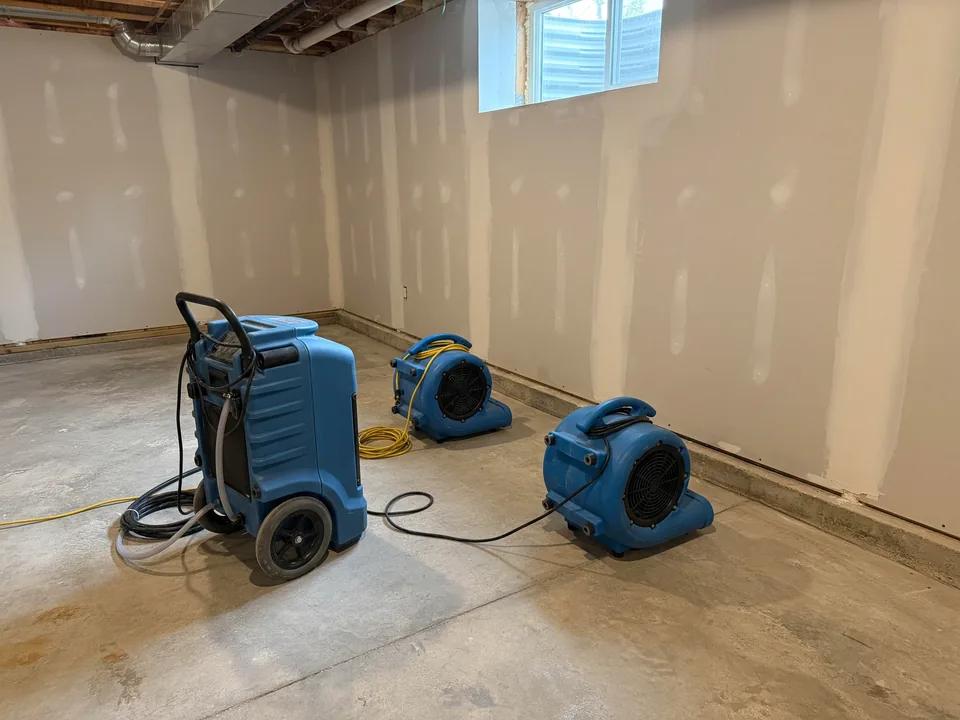
Structural drying and dehumidification removes hidden bound moisture from wood framing, concrete slabs, subfloors, and drywall cavities after bulk water extraction. Independent contractors pair commercial LGR dehumidifiers, high-velocity air movers, and daily moisture-meter readings until every material reaches its verified dry standard.
Local Response for Saratoga Springs Homes
Even after carpets feel dry to the touch, water trapped beneath LVP flooring, inside sill plates, or behind basement vapor barriers can quietly warp wood and trigger mold weeks later. Our Saratoga Springs water damage restoration referral service connects property owners in Harvest Hills, Northshore, Talons Cove, and Eagle Mountain with independent technicians trained in psychrometric drying science.
What Structural Drying & Dehumidification Involves
- Establishing baseline dry-standard moisture readings from unaffected wood and drywall in the same home.
- Calculating exact air-mover placement and low-grain refrigerant (LGR) dehumidifier grain-depression capacity for the room volume.
- Targeted cavity drying (wall-injection panels or floor-mat systems) for hardwood floors and dense framing.
- Daily moisture-meter and hygrometer checks documenting temperature, relative humidity, and wood moisture content.
- Final dry-verification report before equipment pickup so rebuild contractors can safely reinstall baseboards and flooring.
Common Warning Signs to Act On Immediately
- Floorboards cupping, crowning, or creaking days after a leak was wiped up.
- Clammy indoor air, window condensation, or lingering musty smell in a basement.
- Paint bubbling or drywall joints softening along lower wall sections.
- Moisture-meter readings above 16% in wood framing or elevated readings in concrete slabs.
Key Cost & Scope Factors
Drying cost depends on equipment count (number of LGR dehumidifiers and air movers), drying duration (Class 1–4 evaporation difficulty), and whether specialty hardwood drying mats or wall-cavity systems are needed. Read our detailed breakdown of how long structural drying takes and estimate ranges with our cost calculator.
Frequently Asked Questions
How long do dehumidifiers and air movers need to run?
Should I turn off the drying equipment at night to save electricity or reduce noise?
Should I open windows while commercial dehumidifiers are running?
Need Structural Drying & Dehumidification in Saratoga Springs?
Call our free 24/7 referral line to connect directly with an independent local restoration contractor serving ZIP 84045.
Call (801) 555-0194 — 24/7 Dispatch